Showing posts with label perfume. Show all posts

Wednesday, August 24, 2022

Hamlet and Lili - Lebanese perfumes show their colors.

If you don't know Lili or Hamlet (well, the other Hamlet that is) then you'd be forgiven for not being in Lebanon in their heyday in the 80s. The two perfumes - which for a long time we were led to believe, like Garconne and Businessman - to be from Paris, are all local products.

And here they are again advertising themselves. Well, Hamlet had a go previously (see here), but now seems - like all perfumes to have calibrated its formula - with "Chromium" (all major houses do this - and I will never forgive Chanel for Egoiste Platinum when the original was this distinctive). Lili also a flagship perfume is now "Lili Aliena" - if this is a nod to Mugler's Alien perfume I know not, but the branding exercise is worthwhile.

Of course, as I said prior (here), the push towards "made in Lebanon" is becoming more palpable. And good for them, as it is - of course - better for the economy.

By the way, I mentionned above that the ads for the perfumes made us think they were made in France, but actually the original Lili ad had such a nugget inside its jingle that we completely missed. "On l'appelait Lili fatale, ses yeux d'opale nous fascinait, et sa fraicheur tres matinale, nous exaltait a l'air du bal".

Yes, I know it's difficult, but - Lili fatale? As in Lili Fattal, Fattal being the producing company and Lili being... And if you think I am imagining this, please check here.

Monday, March 8, 2021

Paco Rabanne pour homme - a mystery ad that lingers since 1987.

A very close friend of mine loves "the day before you came" by ABBA. He says it is such a mysterious song because one does not know what happens on "the day you came" (check the brilliant lyrics here)! If this is the case, then Paco Rabanne pour homme 1987 ad works in reverse. It is "the day you came" and it lets us assume the day "before".

I am not talking philosophy, simply a lovely piece of advertising that starts with a man descending a colimacon stair, then a curtain unveils and we see a view from a window where someone is checking him departing into a courtyard. The man turns, blows a kiss in the air. He is in full tuxedo, the bowtie still there (assumption: he did not get undressed, ergo, they were not intimate), and from there he goes in a happy-go-lucky walk in Paris, all chirpy, all sincere, kicking autumn leaves that had fallen, dancing with a chair of a cafe about to open, walking on the pont Louis-Philippe, and basically - not believing his luck with an unforced smile on his face (it is the assumption because he has found love, in a story just beginning). 

What is wonderful in the ad, is that it lets you reconstruct the scenario you want about the day before. He is in tuxedo, and it is dawn - were they at the opera the night prior? Were they at a black-tie event? Were they engrossed in conversation so long that he forgot to untie his bowtie? Is it love?

As I said, the beauty of the ad is that it lets assume what you wish to assume about the earlier events, and this is what makes it so memorable. The day after you came indeed.

See the brilliant ad here.

Sunday, March 7, 2021

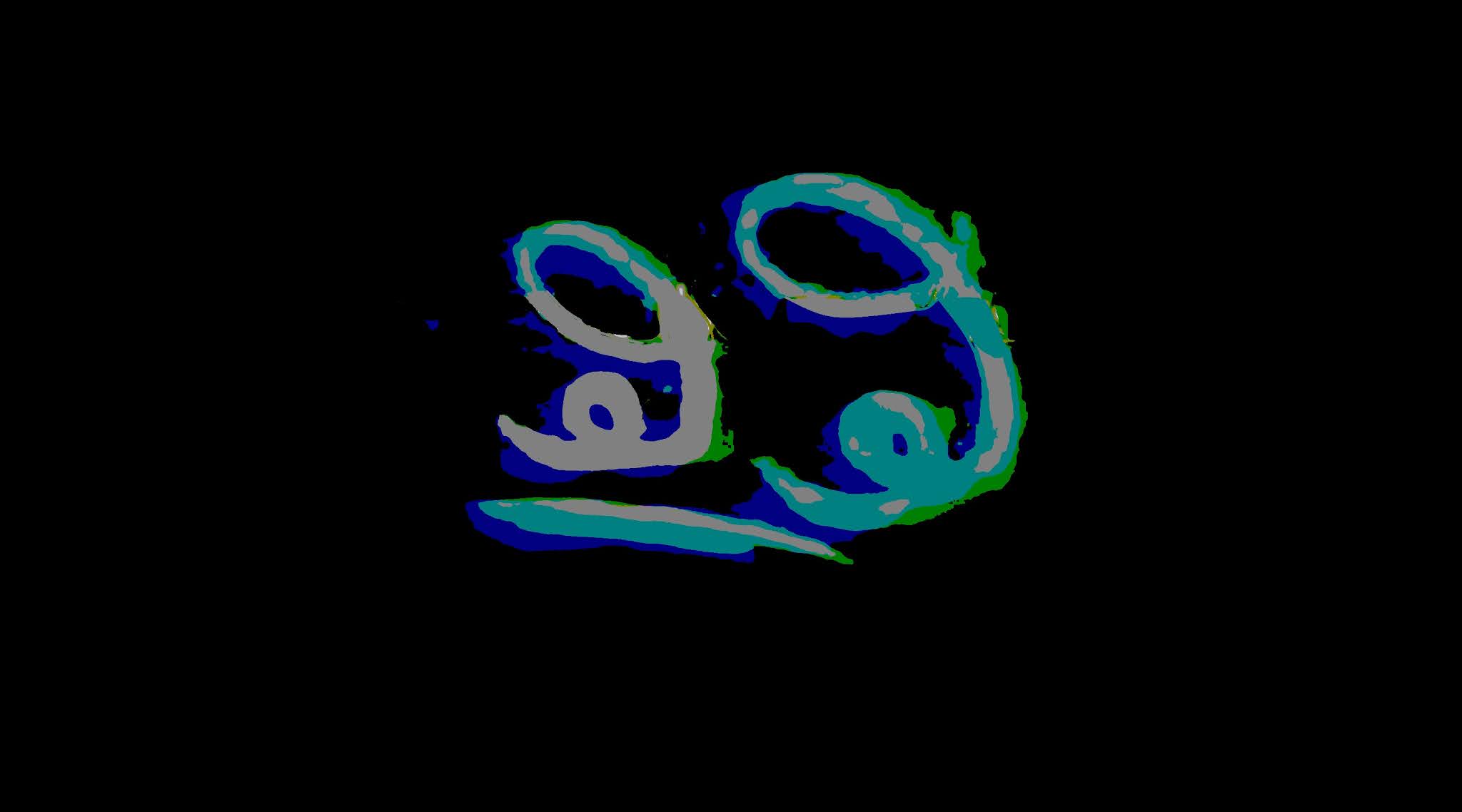
On the transliteration of the Loulou perfume logo


 "Loulou"... "Oui, c'est moi".... 

Rarely has an advertising reply become so iconic in Lebanon - and here I am speaking about the Loulou by Cacharel perfume (see the full ad here). As I was scanning some old Saudi ads, TV ads that is, I realized that the ad was severely cut (nothing of her chest or shoulders showed, neither of her full walking body - a total no no in Saudi advertising), but what struck me that the very brief ad has an Arabized logo of the perfume (please note since the original logo was too low resolution, and that it was heavily watermarked, I had to recreate it digitally basing myself on the image - the effort above is 95% faithful to the one on the screen).

Sure, it stemmed from its Latin counter part, but it was really done to become "Arabic". Note that this was a trend among brands, applied to their advertising materials, but also to their shops - whereby logos would be rewritten in the same font in Arabic or the closest font, and for those with funky logos, recreated as best as possible in Arabic (as a matter of fact, it was a law in Saudi Arabia). The technique is not flawless, as the brasserie Paul logo translated into - pee...